Plasma Cleaner Machine for Wafer Cleaning | 2L Tabletop RF System
You spend three days getting a wafer batch ready. The deposition looks perfect on paper. And then the coating peels off at the edge, or the bond line fails adhesion testing, and nobody in the room can tell you why — because the surface "looked clean" under the microscope. It wasn't. Organic residue, moisture film, a few nanometres of contamination you can't even see, and your whole batch is scrap.
That's the problem a plasma cleaner exists to solve. Not glamorous. Not something anyone talks about at a conference. But it's the one step that decides whether your bonding, your lithography, or your thin-film coating actually holds.
Why "Visually Clean" Isn't Actually Clean
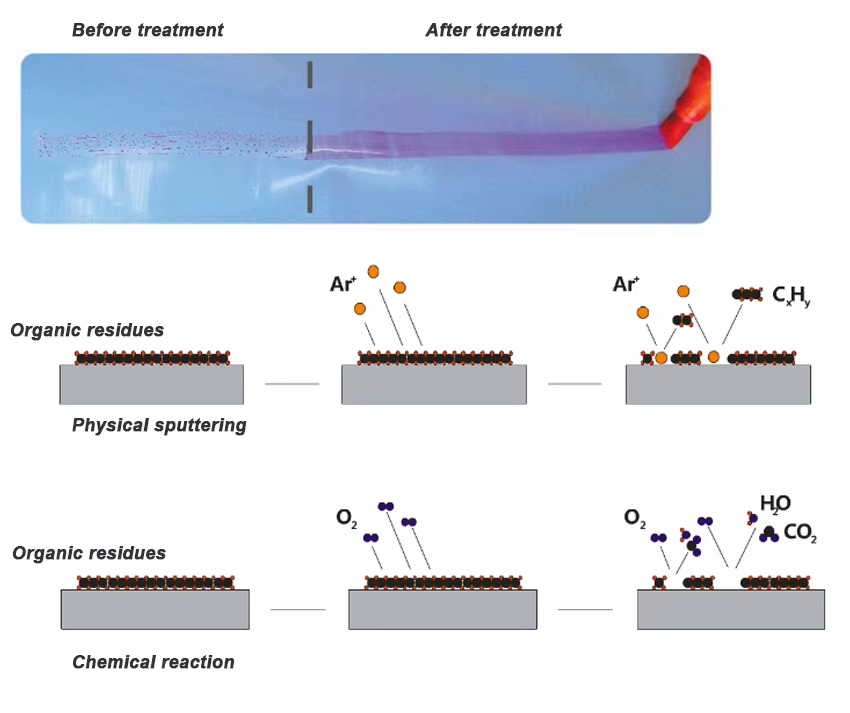
Wipe a wafer with IPA and it looks spotless. Under a contact-angle test, though, it's still hydrophobic in patches — meaning your adhesive or your resist won't wet the surface evenly. Solvent cleaning removes visible grime. It does almost nothing to the monolayer of hydrocarbons that sits on every surface exposed to air. That's the layer plasma actually strips away, and it's why fabs and research labs stopped relying on wet chemistry alone decades ago.
Tabletop 2L 13.56 MHz Plasma Cleaner / Plasma Cleaning System for Wafer Cleaning
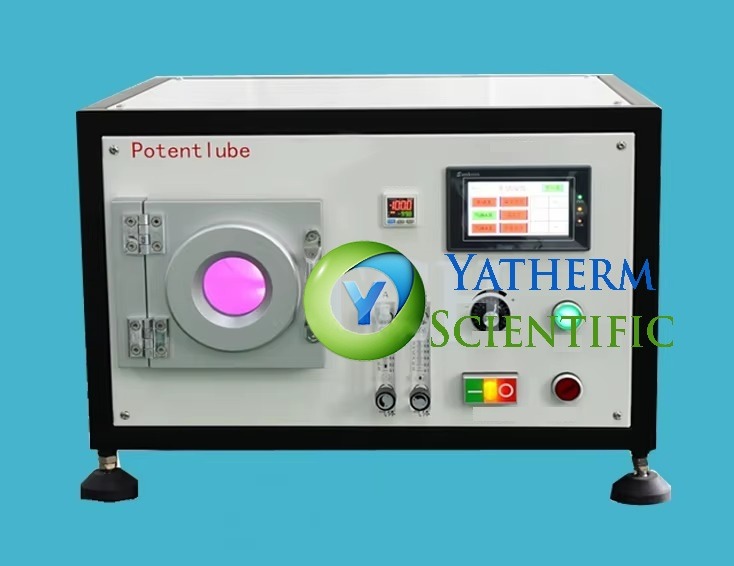
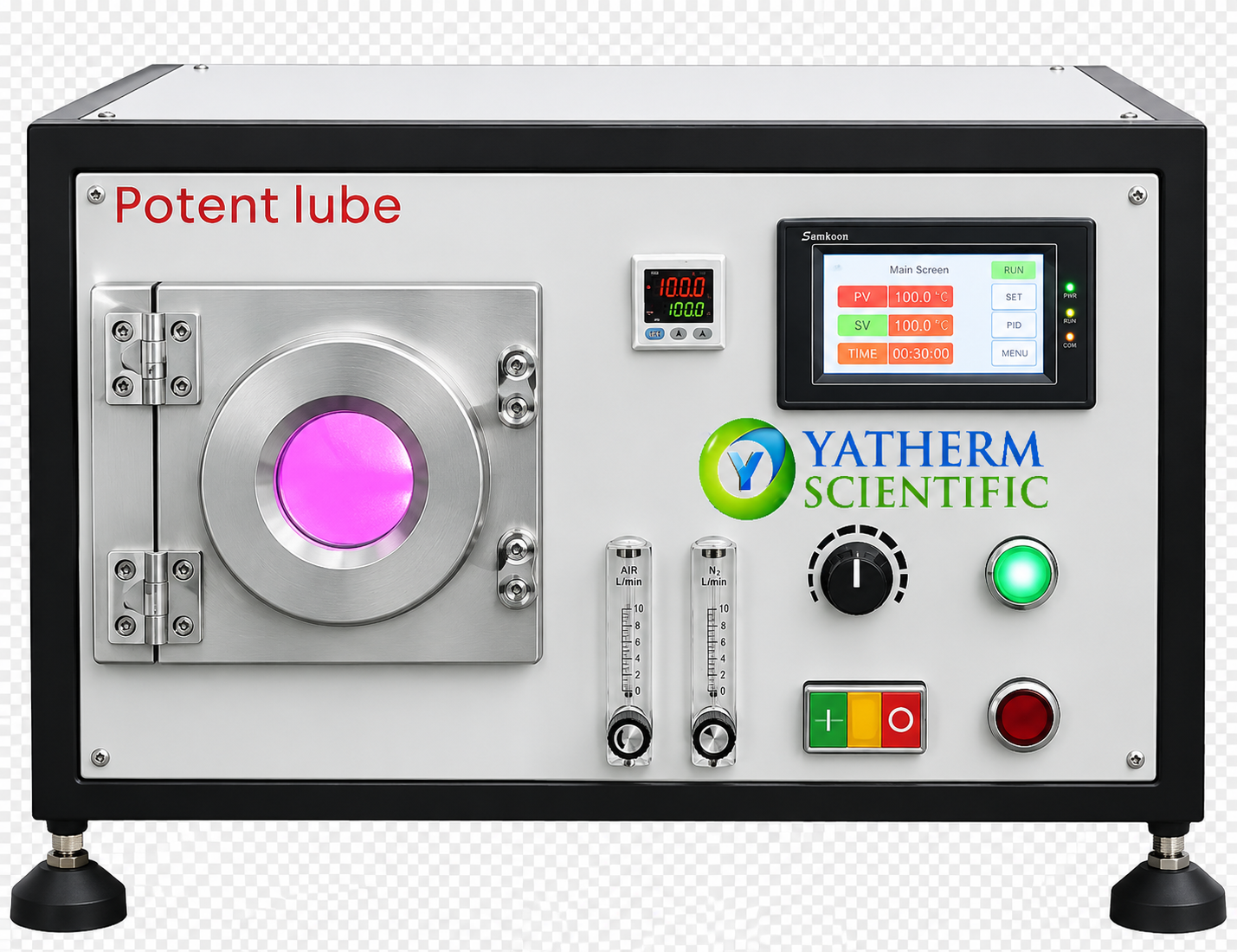
We, Yatherm Scientific, proudly announce our exceptional product the Tabletop 2L 13.56 MHz Plasma Cleaner, It is an extremely powerful solution for wafer cleansing and surface activation, which also solves your space related issues because it's designed in a compact size which can fit anywhere.
The labs and small-scale productions pick this as their first choice. This wonderful mechanism is a perfect blend of plasma cleaning system and advanced vacuum plasma cleaning with atmospheric plasma treatment technology, which makes sure that you always have super clean surfaces with the increase in adhesion and wettability.
2L Chamber with 13.56 MHz RF Plasma
Because it has a built-in, 2-liter plasma chamber, this mechanism is extremely helpful in supporting a range of wafer sizes and delicate substrates.
As it is working at industry-standard 13.56 MHz radio frequency, it is able to generate consistent, uniform plasma that perfectly takes out particles, glue, and other organic remains so perfectly that even at the nanoscale you won't find any residue.
The integration of atmospheric plasma capability helps in further improvements of surface energy and enhances the receptibility of wafers towards coatings, bonding, and lithography.
Safe and Damage-Free Cleaning
This equipment works wonderfully when it comes to making the surfaces absolutely contamination-free before you want to conduct any tasks like deposition, lithography or boarding. Its special design for semiconductor wafer preparation comes in handy for all lab owners who want to do those tasks mentioned above.
As it is equipped with ultra-low temperature plasma options (<50°C), it is capable of treating extremely heat-sensitive wafers and microelectronic parts with utmost care and causes no damage whatsoever. You will be able to experience real-time monitoring of air pressure, voltage, and system temperature, which gives you an absolute guarantee of constant functionality, while the automated failure alarm system always warns you in case of any emergency.
Key Features (Tabletop Plasma Cleaner)
- Tabletop 2L Plasma Chamber which is specifically useful in the versatile lab applications.
- 13.56 MHz RF Plasma Source gives you the best, consistent and uniformly cleaned surfaces throughout.
- Equipped with Vacuum + Atmospheric Plasma, which helps in perfect cleansing and surface activation.
- Experience totally Damage-Free Processing because of its ultra-low temperature options.
- Comes with a wide enough, luminous screen which helps in intelligent Monitoring of pressure, voltage, and system health.
- Built in compact design and which is easy-to-use for research and production laboratories.
Applications
Semiconductor Wafer Cleaning: This technology is extremely helpful in the preparation for lithography, bonding, and thin-film coating.
Consumer Electronics & PCB/FPC Manufacturing: It helps wonderfully in the removal of organic remains and surface activation before you began any task like printing, soldering, or coating.
FPD Display & Glass Industry: It works really well when it comes to cleaning surfaces before bonding and laminating in this particular field.
Automotive & Connector Industry: The useful of this machine in improving adhesion in bonding and assembly processes is absolutely unmatched.
Battery and New Energy Industry: It is the best when it you need to clean electrode and casing surface for trustable assembly.
Why Yatherm Scientific is the Best Pick for Your Business Growth?
Our Tabletop 2L 13.56 MHz Plasma Cleaner provides highly advanced plasma technology, which is loaded in a compact, trustable and lab-ready mechanism. By making a perfect integrated system of accurate wafer cleaning with broad atmospheric plasma applications, we make sure that you experience damage-free surfaces, high level bonding strength, and increased precision for semiconductor, electronics, and industrial manufacturing.
Specification of the Tabletop 2L 13.56MHZ plasma cleaner / plasma cleaning system for wafer cleaning
You'll find the complete spec sheet further down this page — chamber size, RF power range, vacuum degree, and everything else the datasheet usually buries in fine print.
Where This Machine Actually Fits in Your Lab
Nobody buys a plasma system on a whim. Usually someone's rejection rate climbed, a client audit flagged inconsistent bond strength, or a new product line needs surface prep that solvent wiping just can't deliver. If that's you, this unit sits between a bare-bones benchtop plasma cleaner and a full production-line plasma asher — small enough for a research bench, strong enough for low-volume production runs. If your throughput is already in the thousands of wafers a day, talk to our team about our larger semiconductor cleanroom equipment range instead — this tabletop unit is built for R&D and small-batch manufacturing, not 24/7 fab lines.
Curious what it would cost landed at your facility, or whether the 100W or 300W RF configuration suits your substrate? Get in touch with our applications team and we'll walk you through it against your actual samples, not a generic spec sheet.
Frequently Asked Questions About Plasma Cleaning Machines
What frequency does a plasma cleaner work at?
Almost every RF plasma cleaner on the market — ours included — runs at 13.56 MHz. It's not an arbitrary number. International telecom regulators set aside 13.56 MHz specifically for industrial, scientific, and medical (ISM) use, so equipment running at that frequency doesn't need special radio licensing. Some labs use 40 kHz units for gentler, low-power jobs, but 13.56 MHz is the industry default for semiconductor and electronics work. (A que frecuencia trabaja este equipo? — 13.56 MHz es la frecuencia estándar de la industria.)
What is the price of this plasma cleaning machine in India?
There's no single number we can print here, and honestly, be suspicious of any supplier who gives you one without asking a single question first. Plasma cleaner price depends on RF power (100W vs 300W), chamber size, gas configuration, and whether you need automatic impedance matching. Request a quote through our contact page and we'll price it against your actual wafer size and throughput.
Can I just build a DIY plasma cleaner instead of buying one?
People have done it — there's even a well-known university write-up on building a microwave-based plasma cleaner from a household microwave oven. It works for teaching demos. It does not give you repeatable RF matching, safety interlocks, or the uniformity control a real production or research process needs. A diy plasma cleaner is fine for a classroom experiment; it's a liability in a validated cleanroom process.
What's the difference between a plasma cleaner and a plasma asher or plasma oven?
A plasma asher machine is tuned specifically to strip photoresist and organic ash residue, usually with oxygen plasma at higher power and longer cycle times. A plasma oven is more of an older industry term for the same category of batch chamber system. Our tabletop unit does general-purpose cleaning, ashing, and surface activation in one chamber — you set the recipe by gas mix, power, and time.
Is a vacuum plasma cleaner better than an atmospheric plasma wand for surface activation?
Depends on the job. A plasma wand or handheld atmospheric unit is faster for spot-treating large or oddly shaped parts on a line — no vacuum cycle, no chamber loading. But you lose uniformity control and can't hit the same low-pressure, low-temperature conditions. For wafers, delicate substrates, or anything needing consistent plasma surface activation across the whole part, a vacuum chamber system wins every time.
How is a medium vacuum plasma cleaner different for semiconductors versus electronics assembly?
The chamber and RF matching stay similar, but the recipe changes completely. A medium vacuum plasma cleaner for semiconductors usually runs argon or oxygen at tighter pressure control for lithography and bonding prep. A medium vacuum plasma cleaner for electronics — PCB, FPC, connector assembly — often runs shorter cycles focused on flux residue and oxide removal before soldering. Same machine category, different process window.
Where can I get the plasma cleaner datasheet for this model?
The full technical datasheet — RF power range, vacuum degree, chamber dimensions, flow rate — is in the specifications section below on this page. If you need the PDF version with drawings for procurement or import documentation, request it through our contact page and we'll send the complete file.
Is this machine ergonomic enough for daily lab use?
Ergonomics matters more than most spec sheets admit — a chamber that's awkward to load gets used less, and inconsistent loading is how you get inconsistent results. This unit's tabletop footprint sits at standard bench height, the chamber door opens front-facing, and the control panel is angled for seated operation, so a technician isn't hunching over it for every cycle.
So — before you write off another batch as "unexplained adhesion failure," check what's actually sitting on the surface. A five-minute plasma cycle costs a lot less than a scrapped wafer run. What's your current process for surface prep before bonding or coating — solvent wipe, UV-ozone, or nothing at all? Tell us in the comments, we'd genuinely like to know what most labs are still doing.