What Is an Environmental Test Chamber
Picture this: a product passes every bench test you throw at it, ships out, and then six months later starts failing in the field — a connector corrodes in a humid warehouse, a plastic housing warps in a hot truck, a PCB fails after one too many temperature swings. And now you're doing root-cause analysis after the damage is already done, instead of before. An environmental test chamber exists so you catch that failure in week two of development, not month six of field returns.
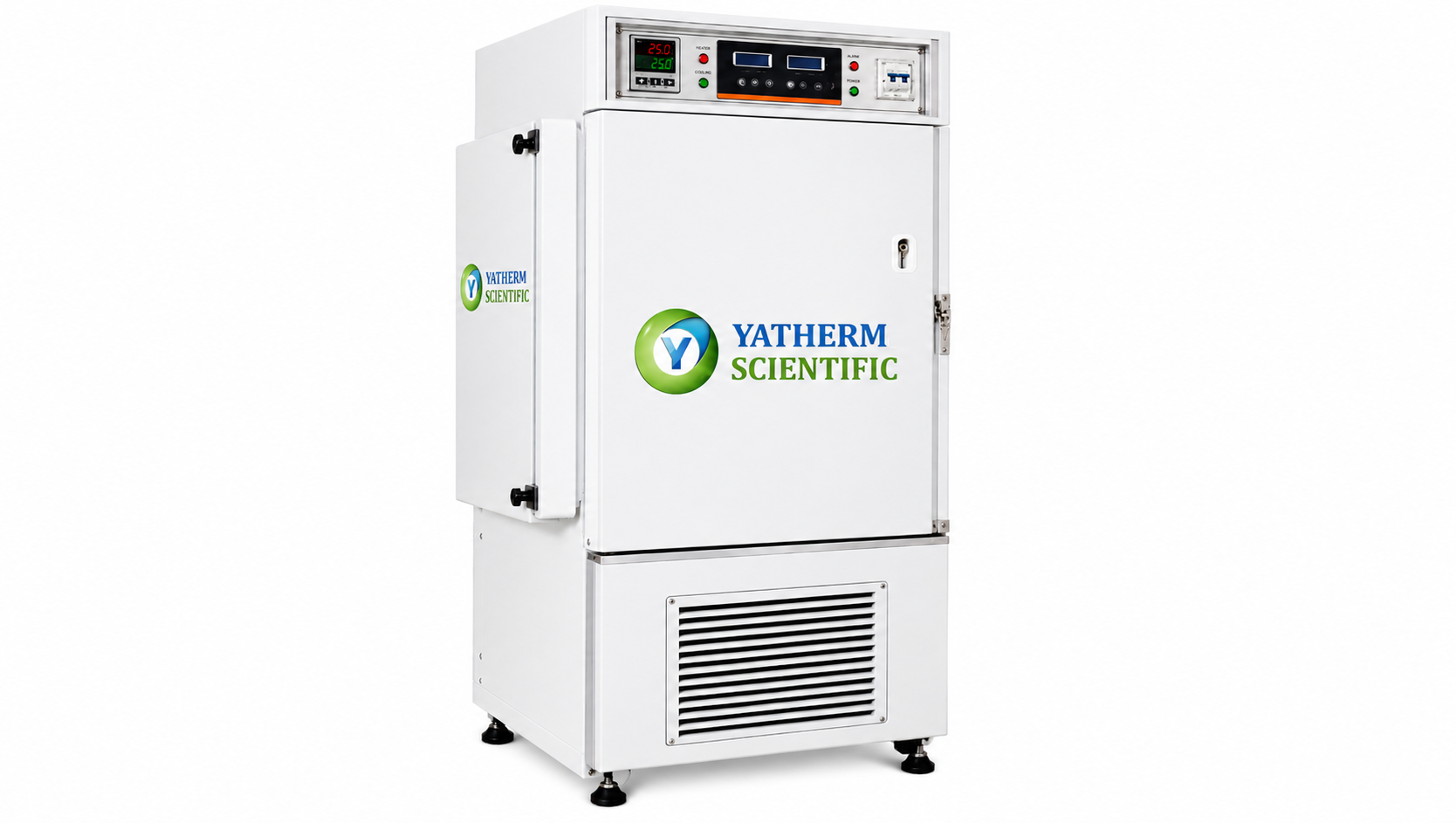
An Environmental Test Chamber (ETC) — sometimes called a humidity test chamber or environmental chamber — is built to simulate the effects of specific environmental conditions like motion, light, air pressure, and temperature on materials, industrial products, biological items, and electronic devices. These chambers are also how manufacturing flaws and weaknesses get identified early, and how product quality and reliability actually get evaluated under supervision rather than guessed at. The results you pull out of a chamber — the degradation and decay a product shows after simulated exposure — tell you its realistic lifespan long before it ever reaches a customer.
How Extreme Can These Chambers Go
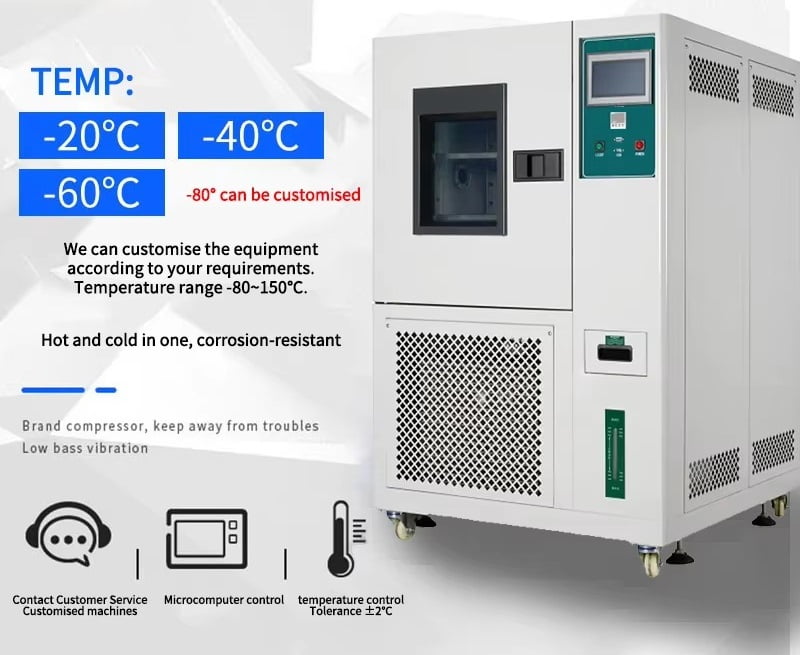
A climatic test chamber or climate chamber unit is designed for extremely cold environments down to -80°C, and companies also use these same chambers to model temperatures as high as +350°C. In practical terms, that means modeling almost any environment — from deep-frozen storage to desert heat to rainforest humidity — inside one environmental test chamber.
When you're actually shopping for one, the features that matter most are an adequate rapid temperature change rate for your test conditions, a chamber size that fits your specimen, and precise, accurate temperature control. Both conducting a full test and simply conditioning test specimens beforehand can be handled by the same climatic chamber, though conditioning alone can usually run in a smaller unit if that's all you need. Some chambers are simple to set at one fixed condition using the built-in instructions; others are built for programming through a defined sequence of conditions over time, which matters if your protocol involves multiple stages.
What's Actually Running the Cooling and Control
Yatherm test chambers use a high-quality, environmentally friendly cooling system, with a temperature range starting from ambient down to -70°C. The refrigeration system also helps hold relative humidity steady at low temperatures, which is where a lot of cheaper chambers start to struggle.
- Compressor: Fully hermetically sealed
- Refrigerant: Environmentally friendly CFC/HCFC-free R404A
- Condenser: Customized fin type with heat dissipation motor
- Evaporator: Multi-section fin type with automatic load capacity adjustment
- Accessories: Desiccant, refrigerant flow window, repair valve
- Expansion system: Refrigeration system with built-in capacity control
The control system is really the heart of a climatic test chamber — it's what actually determines whether your test results are trustworthy. Yatherm's control system manages chamber temperature, chamber humidity, high/low alarms, humidity injection from the generation tank, compressor maintenance, and the humidity tank's water cut-off system. On accuracy, you're looking at temperature ± 0.1°C + 1 digit and relative humidity ± 1% RH + 1 digit, with resolution down to ± 0.01°C for temperature and 0.1% RH for humidity. Every chamber ships with upper/lower limit standby and audio/visual alarms, PT100 Ω × 2 sensors for dry and wet bulb readings, a standard 4–20mA temperature and humidity conversion output, and a PLC with HMI running six groups of PID control parameters with automatic dry/wet bulb correction.
What a Standard Test Chamber Needs to Deliver
Not every "environmental chamber" on the market is actually built for serious lab work. Here's the baseline we hold every Yatherm unit to:
- USB, RS-232, RS-485 and Ethernet connectivity
- 500MB internal storage, enough for over 1,000 program steps
- Real-time temperature, humidity and time graphing with storage
- Auto-tuning system
- Three-level security password for Admin, User, and Lab Officer
- Up to 99 programs with repetitive operation
- Touch panel with low-water indication, door-open alarm, high/low temperature alarm, and real-time display of set vs present values
- Data storage tagged with user name, file name, and program name
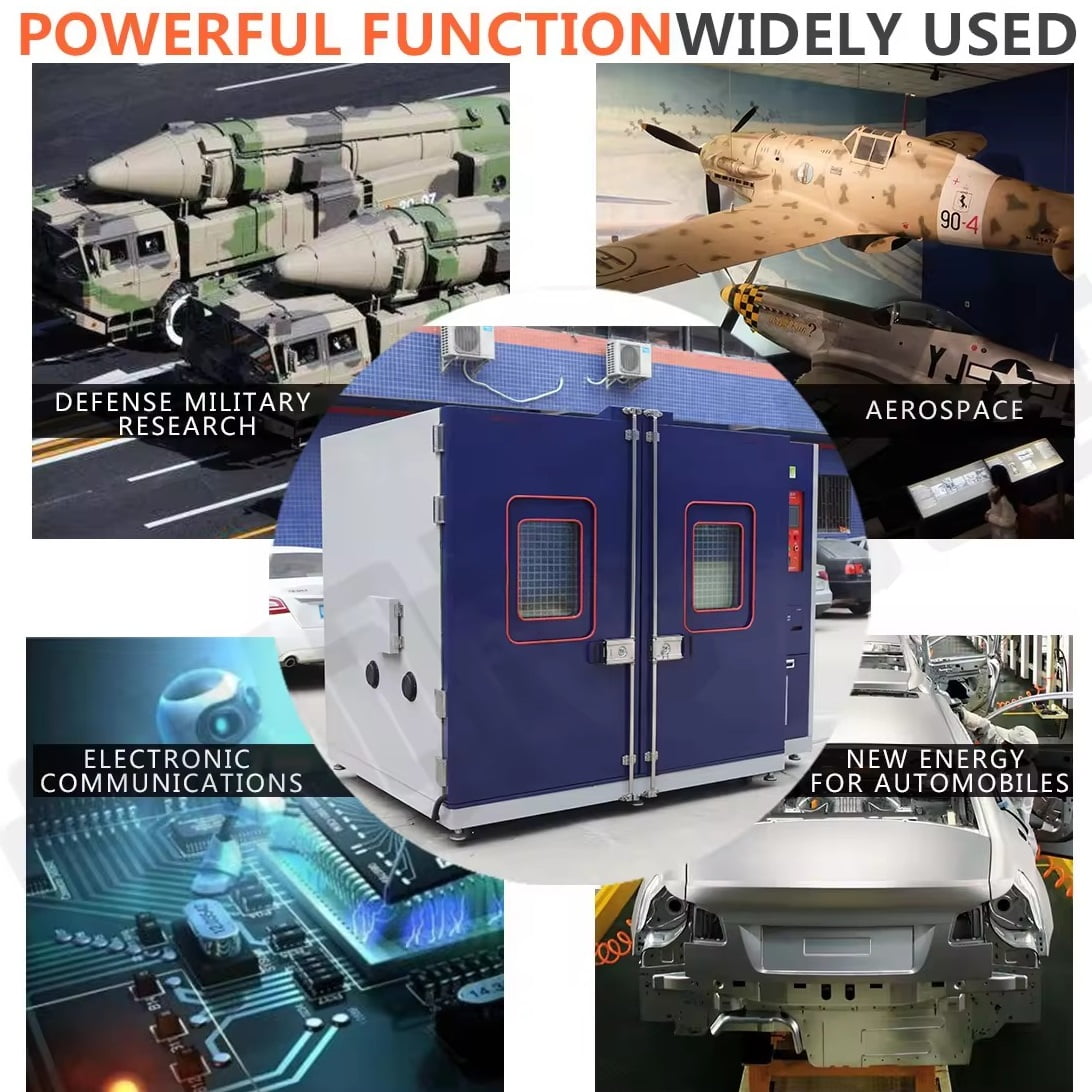
Range, Reliability and Real-World Use
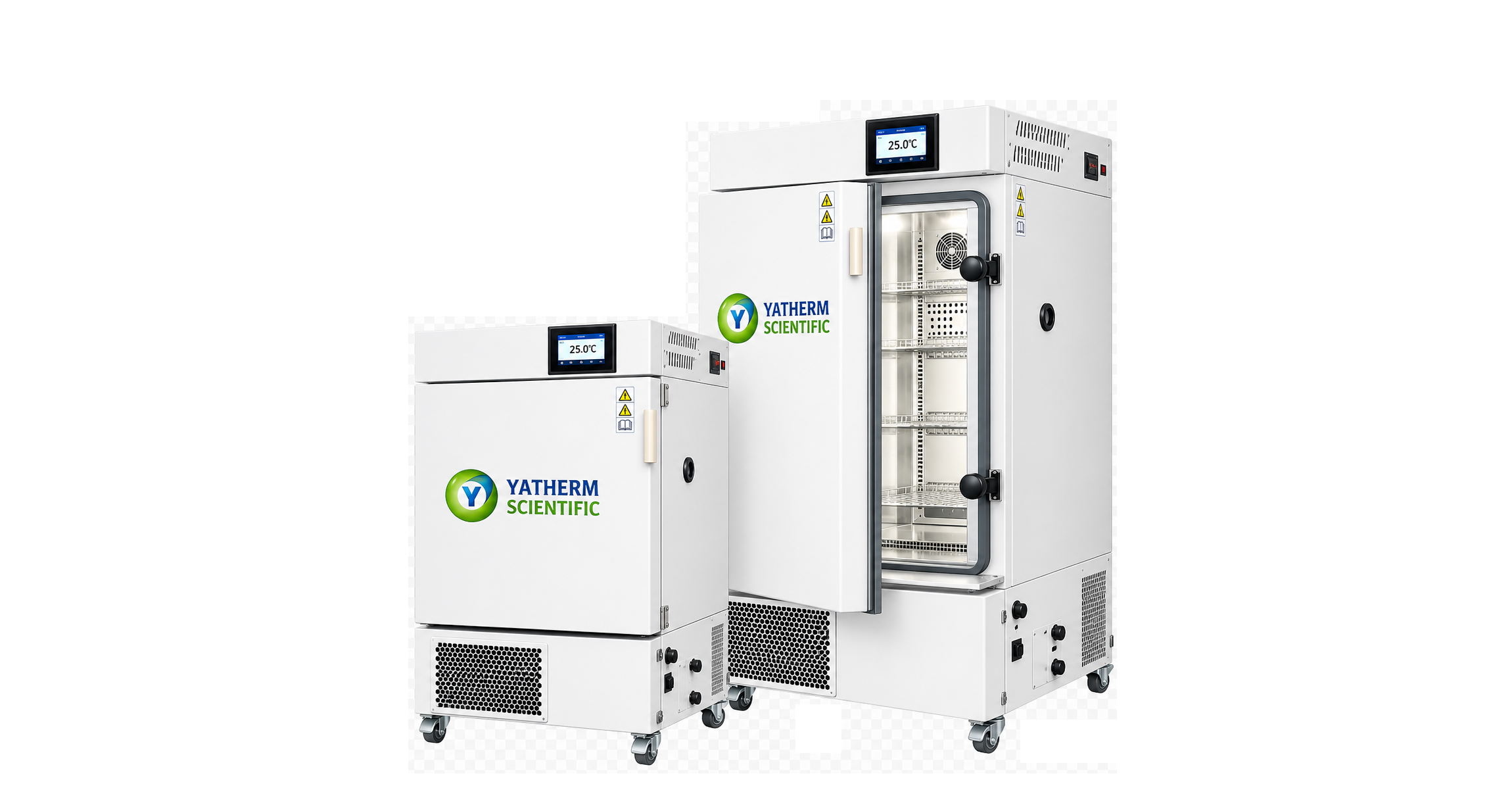
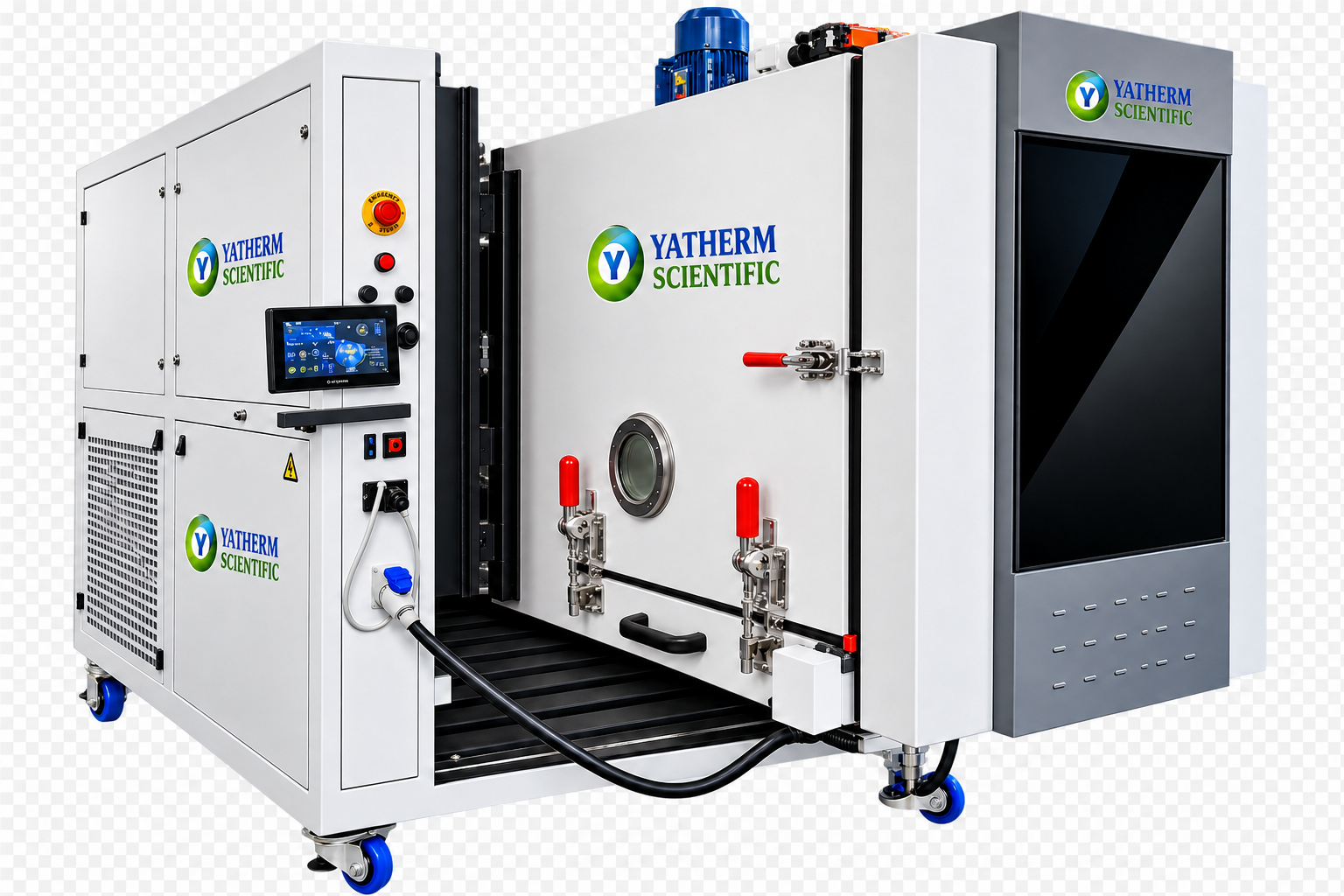
Yatherm Scientific carries a wide collection of environmental chambers for climatic simulation, temperature, humidity, and photostability testing, built with quality construction that holds up to international standards. Our range runs as low as -84°C (-120°F) up to +350°C (+662°F), with humidity control from 10% to 98% RH. Whether you need a small benchtop chamber for testing components or a full walk-in/drive-in room big enough for a semi-truck and trailer, there's a configuration that fits without forcing you into an oversized or undersized unit.
Our full ETC range covers stress screening, corrosion, temperature, humidity, vibration, thermal shock, solar light, and altitude pressure testing. Chambers are available in cabinet style or walk-in type, and every unit is customizable to specific test standards, built with rugged construction, precise temperature accuracy, trend graph display, imported PLC-based HMI operation, and low-noise running.
As an environmental test chamber manufacturer, we're ISO, CE and GMP certified, and our chambers meet international performance standards including GB5170 for high and low temperature testing with stable and variable humidity for electronic and electrical components, along with GB 2423 series, IEC68-2 series, MIL-STD-810F, MIL-STD-883C, and JESD22 semiconductor industry standards. That standards coverage matters if your lab is working toward accreditation or already answers to an export or defense customer's spec sheet.
Why Labs Choose Yatherm
Yatherm Scientific is one of India's most established climatic test chamber manufacturers, and we work to fulfill environmental simulation needs at competitive prices without cutting corners on build quality. Whether you need a custom-designed chamber for a specific protocol or a standard unit off our existing range, our engineering team handles both the same way — matched to your actual test requirement, not the biggest catalog number available. If your testing program also needs dedicated stability testing alongside general environmental simulation, it's worth speccing both together so your lab layout and power requirements are planned properly from day one.
Frequently Asked Questions
1. What's the difference between an environmental test chamber and a climatic test chamber?
They're largely used interchangeably. Both simulate temperature, humidity and other environmental conditions, though "climatic" chambers often emphasize combined temperature-humidity cycling for weather-simulation protocols.
2. What's the widest temperature range Yatherm offers?
As low as -84°C (-120°F) up to +350°C (+662°F), with standard chambers typically running -70°C to +180°C, extendable to +200°C on request.
3. What humidity range can these chambers hold?
10% to 98% RH, with humidity accuracy of ± 1% RH.
4. Can I test both temperature and humidity at the same time?
Yes — Yatherm's climatic models are built for combined temperature and humidity control with rate-of-change options from 6K/min up to 18K/min depending on the model.
5. What international standards do these chambers meet?
GB5170 and GB 2423 series, IEC68-2 series, MIL-STD-810F, MIL-STD-883C, and JESD22 semiconductor standards, among others.
6. What's the difference between cabinet-style and walk-in chambers?
Cabinet-style units suit smaller components and benchtop testing; walk-in or drive-in chambers accommodate large assemblies, vehicles, or bulk product batches.
7. How is humidity generated and maintained inside the chamber?
Through an inbuilt humidity generation tank with automatic water replenishment, a double-layer pre-filter, and two connected water pumps with low-water cut-off protection.
8. Can I monitor the actual sample temperature, not just chamber temperature?
Yes — a temperature probe attaches directly to the sample and feeds data into the logger system for independent monitoring.
9. Does Yatherm offer custom-built chambers?
Yes, alongside our standard range, we design custom chambers to match specific test standards, sizes, and rate-of-change requirements.
Setting up a test lab or replacing an aging chamber and not sure which model matches your protocol? Talk to our team with your temperature range, humidity range, and specimen size, and we'll match you to the right configuration instead of the biggest one on the shelf. And if you've caught a product failure early thanks to environmental testing (or missed one because a chamber wasn't up to spec), share it in the comments — that kind of detail helps more people than another spec sheet does.