

Durability Accelerated: How Does A Carbonation Chamber Works?
When it comes to fields like civil engineering and material science, it is extremely important that endurability and longevity for concrete structures is maintained.
One of the main dangers to reinforced concrete is carbonation, which is a slow and gradually occurring chemical reaction that decreases the concrete’s alkalinity which acts as a protective layer, making it prone to corrosion of steel reinforcement.
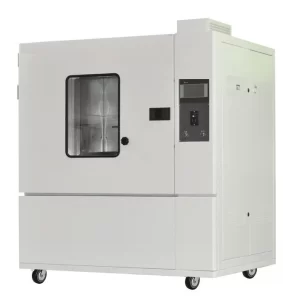
To make sure that this whole thing, which is a long term issue, is precisely predicted and mitigated properly, one must require a phenomenal tool and A Carbonation Chamber works perfectly in this regard.
The Carbonation Process Explained
Carbonation is the process of reaction happening between the carbon dioxide (CO2) which becomes diffused through the pores in concrete and the calcium hydroxide { Ca(OH)2} available in the hydrated paste of the cement.
This reaction helps in the formation of Calcium Carbonate (CaCO3) and reduces the pH Levels of concrete from its decent amount of alkaline nature (which is around 12.5) to neutral (around 8 or 9).
Once the pH level goes down beyond what is crucial for keeping the protective layer intact, the steel rebar begins to deteriorate, which causes corrosion and decay in the structural integrity.
Accelerating Nature’s Timeline
The actual carbonation process can take a very long time, years, maybe decades, when it’s happening in the real world to the structures.
The Carbonation Chamber is engineered to speed up this process in a regulated environment, which allows engineers and research professionals to testify for the carbonation resistance of various concrete mixes and building materials within a significantly shorter amount of time, which is around weeks or months.
This helps in drastically speeding up the R & D for more endurable construction substances.
Precision Environmental Control
Yatherm Scientific’s chambers offer the essential accuracy needed for the simulation and intensification of this environmental exposure. The key parameters here are strictly controlled:
CO2 Concentration: A significantly high amount of concentration is maintained which is often 1% to 5%, which is quite high when it is compared to the environment (around 0.04%).
Temperature: The typical range of temperature is kept between 20°C to 27°C.
Relative Humidity (RH): RH is accurately controlled and kept in between 40% and 80%, because moisture plays significantly in the rate of carbonation.
A silent, forced air circulation system makes sure that homogenous distribution of temperature, moisture and CO2 is maintained within the chamber for consistent outcomes across all types of concrete samples.
Essential for Building Material R&D
The capability to accurately regulate these factors makes this equipment crucial for:
Durability Testing: Conducting the assessment of the expected service life of reinforced concrete structures.
Mix Design Optimization: To test the new cementitious substances, additives, and supplementary cementitious substances (SCMs) for the improvement of resistance.
Quality Control: For the verification of a particular batch of concrete, whether it meets the necessary endurability specifications.
By putting your money in a Carbonation Chamber from Yatherm Scientific, you are investing not just in a tool but in utmost quality, offering the crucial data which is absolutely necessary for building structures that can withstand the test of time.